Timor-Leste: The Youngest Country in Asia That Nobody Visits
I booked the flight the day before I went. No hotel. No plan. Just landed in what is genuinely one of the most overlooked countries in Southeast Asia and figured it out from there. Less than 100,000 people visit Timor-Leste every year. That is either adventurous or stupid depending on who you ask, and honestly both answers are probably correct.
Timor-Leste sits at the eastern end of the Indonesian archipelago, a small country that has been through more than most places three times its size. Over 400 years of Portuguese colonial rule, 24 years of brutal Indonesian occupation that killed an estimated 200,000 people, roughly a third of the population at the time, a UN-backed independence referendum in 1999, and then finally, in 2002, independence. The youngest country in Asia, formally recognised on the 20th of May 2002, built almost from scratch on top of everything that had happened to it before.
I knew almost none of this before I booked the flight. I knew more by the time I left, which is probably the best argument for going.
The Immigration Experience Is Tragic
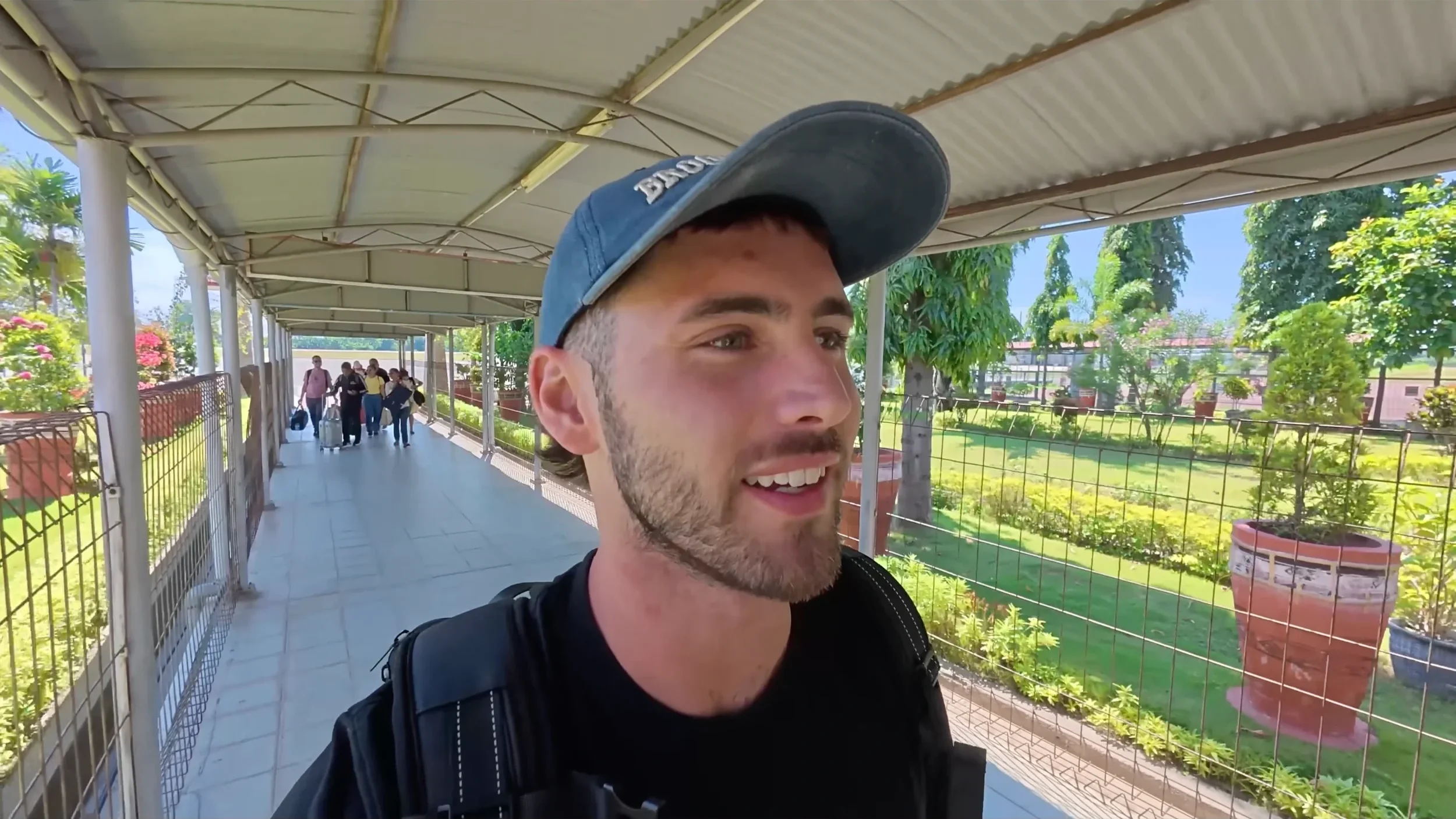
Three flights a day land in Dili, the capital. You would think that would make immigration a fairly manageable operation. It does not. There is an e-travel declaration form you have to fill out before you can pass through, which sounds fine until you realise the airport internet does not work and they have 6 laptops available for an entire plane of people, 3 of which are broken.
So you just sit there. Waiting. Filling out a form on a broken government laptop in a country you have never been to before, until eventually you get through.
I got a SIM card for $10 from a woman at the counter who, when I asked what I should do while I was here, told me to visit the Cristo Rei statue and the Tais Market. Solid advice delivered with genuine warmth, which set the tone for basically everything that followed.
Welcome to Timor-Leste
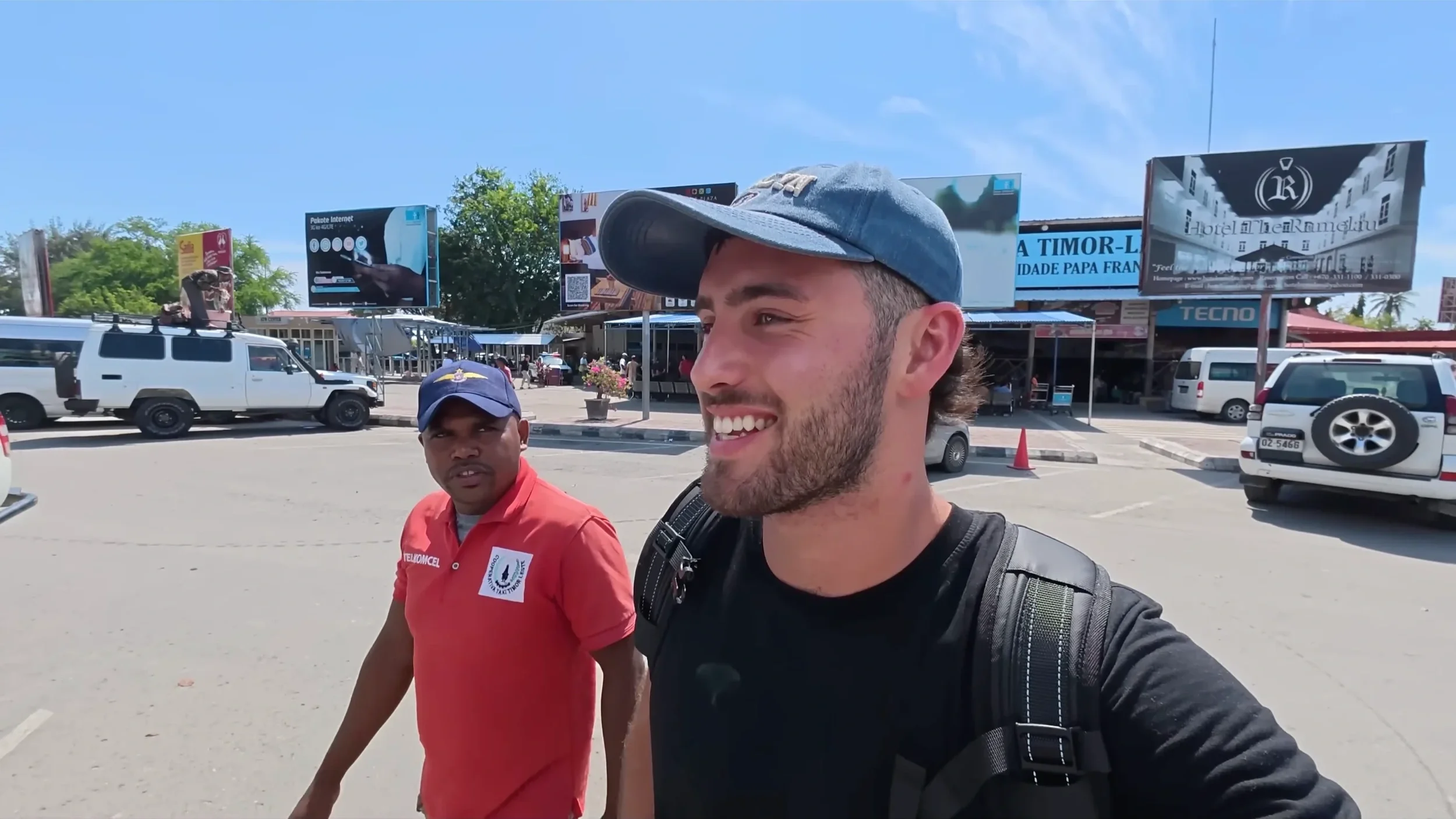
Just outside the airport there were taxi drivers competing for the ride. One of them was named Marcelo, which makes complete sense because Timor-Leste was a Portuguese colony from 1702 until 1975 and Portuguese names are still very common here. He also speaks 4 languages: Tetum, Portuguese, English, and Bahasa Indonesian, which made me feel sufficiently underprepared for the country I had just entered.
We agreed on $20 to get to the Plaza Hotel, which he recommended, and within about 90 seconds of leaving the airport we drove past a motorbike crash. A kid had gone down. He looked shaken but okay.
On the drive in, Marcelo pointed out a poster of the president and told me he was a good man. The country got its independence on May 20, 2002, after a UN referendum in 1999 gave the Timorese people the chance to vote for it and around 80% said yes. Days later, Indonesian-backed militias tore through the country destroying what remained of the infrastructure. The UN sent in a peacekeeping mission led by Australia and in 2002 the country was formally recognised as the first new sovereign state of the 21st century. That is a lot of history for a country most people have never heard of, and I was all about discovering it on this trip.
The First Timorese Meal
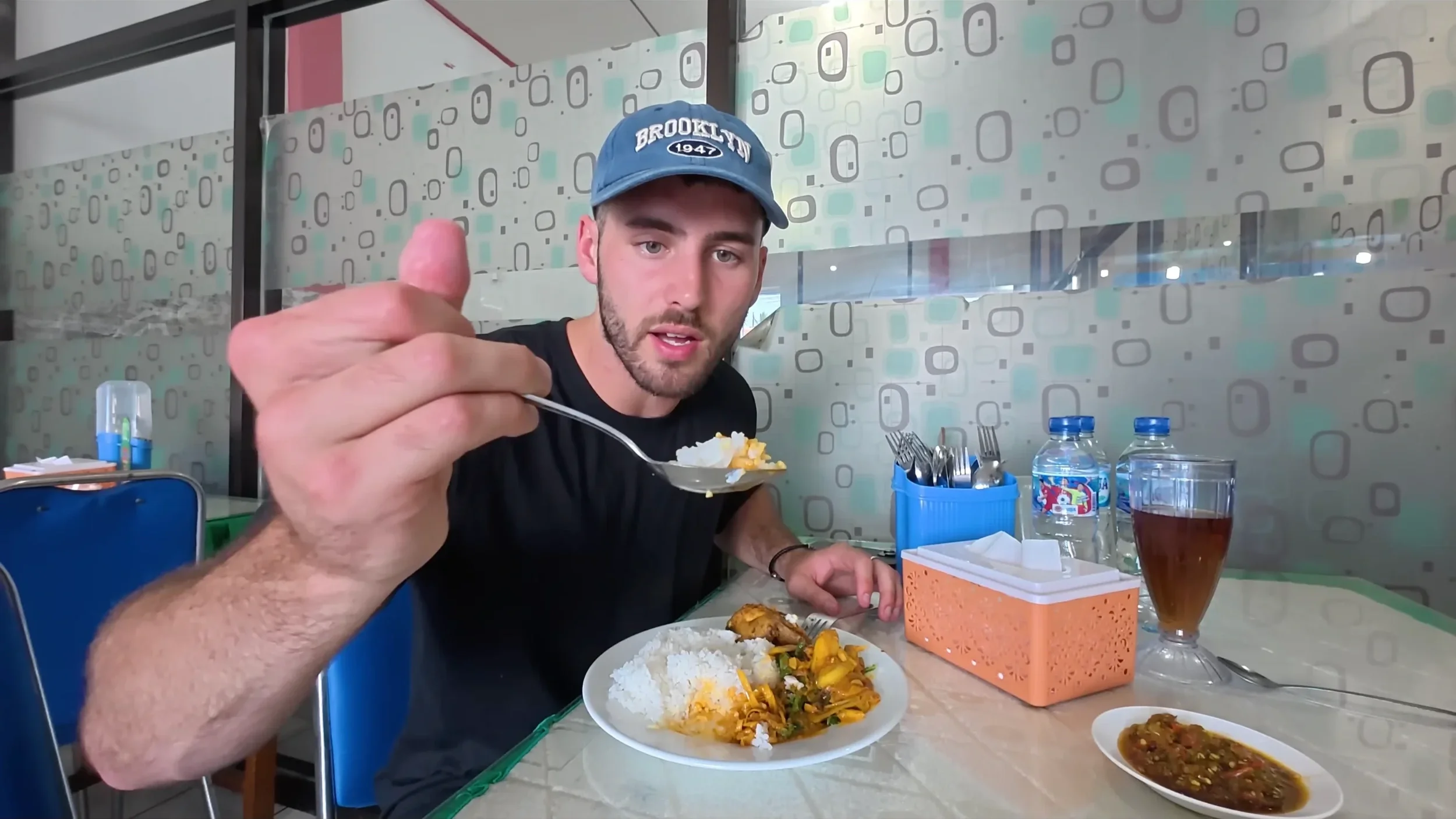
On the drive to the hotel I asked Marcelo a few questions, and since we were getting on well and it was lunchtime he took me to eat before checking in. He called it makan, which I spent about 10 minutes assuming was the name of a specific Timorese dish before working out that it just means "eating" in Bahasa Indonesian.
The restaurant was a classic Indonesian-style buffet setup, the kind I never usually eat from. Rice, what looked like chicken, some pickled cucumber, and a few other things I could not fully identify, including what I was fairly confident were pig intestines and some lamb bones. I got the chicken drumstick to be safe. The curry was leafy, not very spicy, actually pleasant. The whole meal cost $8.50, paid in US dollars, with 50 cents change back in Timorese coins.
Which leads to the obvious question. Why US dollars? I genuinely do not know and nobody could fully explain it. Timor-Leste has its own coins in small denominations pegged to the dollar, but uses US notes for anything larger. It makes the country surprisingly expensive for Southeast Asia, and the $95 hotel room I was about to check into would confirm that.
The Hotel Room Looks Like a Correctional Facility
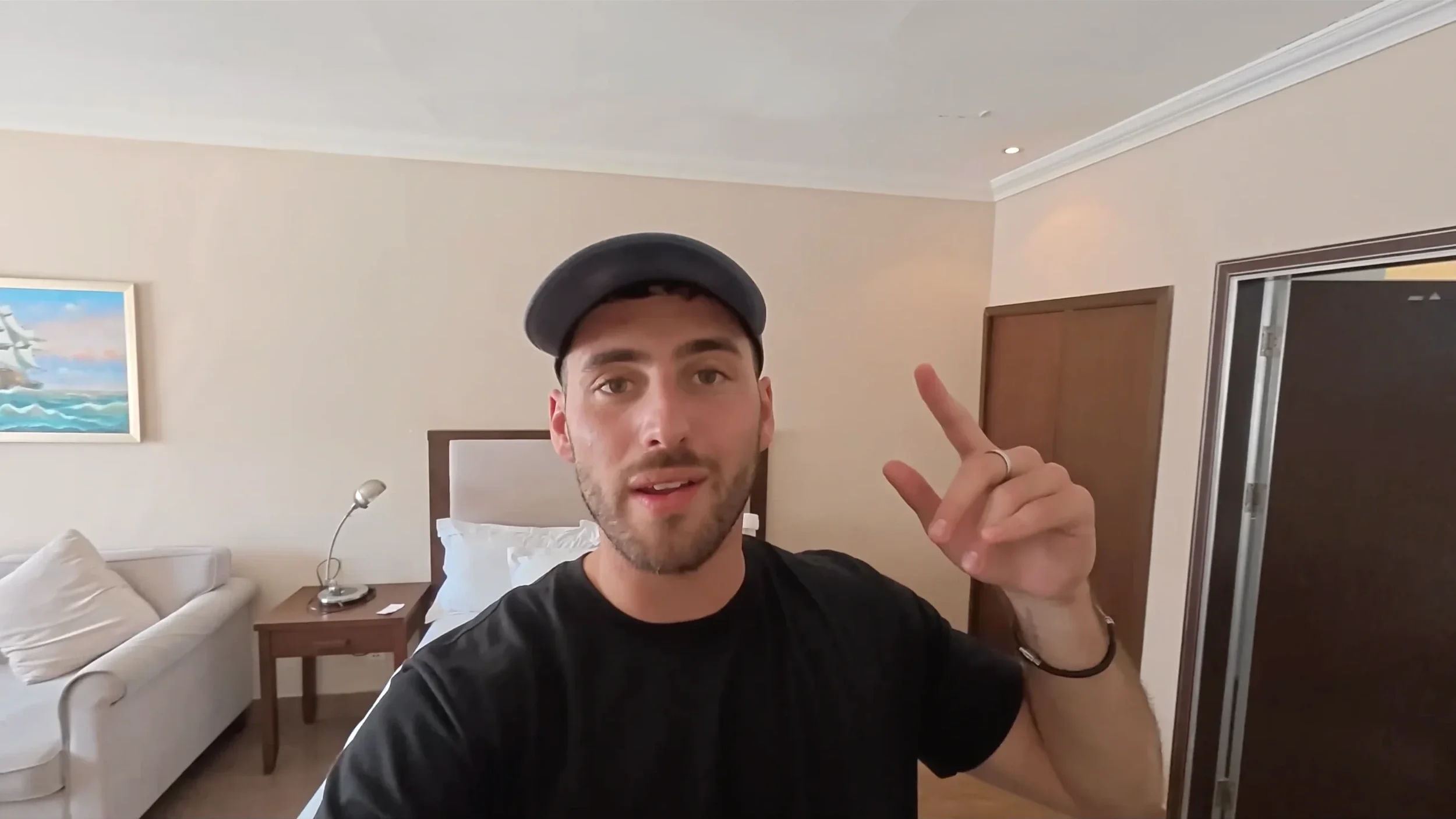
We reached the hotel, said goodbye to Marcelo, and headed inside. Two kind women at check-in confirmed they had a room. One of them asked for my YouTube channel so she could subscribe, then told me I had more followers than the entire population of Timor-Leste. She was not wrong.
The room had Christian decorations on the walls, which makes complete sense. Timor-Leste is around 97% Catholic, the highest proportion of any UN member state in the world, a legacy of over 400 years of Portuguese colonisation. The faith also became deeply intertwined with the independence movement during the Indonesian occupation, when the Church was one of the few institutions the government could not fully suppress.
The price was $95 for one night. No minibar. A bathroom at least separated from the toilet, which in this part of the world you learn to appreciate. The sheets were clean, the bed was a 6 out of 10, hard but manageable. The pillows were soft, which I have found is usually how it goes. The toilet was broken and could not flush, which I chose not to think too much about. The room looked like a correctional facility. But for Timor-Leste, honestly, it was fine.
Feeding Crocodiles at the Police Station
After settling in I headed out to explore. Walking toward the beach I spotted people selling cigarettes. If you know me, you know I do not smoke except in a few specific cases. I was in a new country so I was allowed to try local cigarettes, purely for comparison purposes. It is part of my terms and conditions for smoking. A loophole, technically, but a legitimate one.
I bought a pack from a young girl clearly reselling for someone, a few people gathered and asked to share, I did, and tried to ask how to get to the police station. Their English was limited. A friend had told me to get on the "collectivo" to get around town. Three attempts later I established that nobody in Timor-Leste calls it that. The correct term is Microlet. Or possibly Bemo. Or something else depending on who you ask and which of the country's 4 languages they happen to be using.
I got on one anyway, 50 cents for about 15 minutes, hung out the open side door through traffic, had a conversation with a man named Bion who seemed genuinely pleased I had arrived that day, and somehow ended up directly in front of the Presidential Palace. The Nicolau Lobato Presidential Palace, to be specific, which had reindeers in the back garden. I know how that sounds. They were definitely reindeers. There were also goats and chickens, just there, outside the presidential palace, in the tropics.
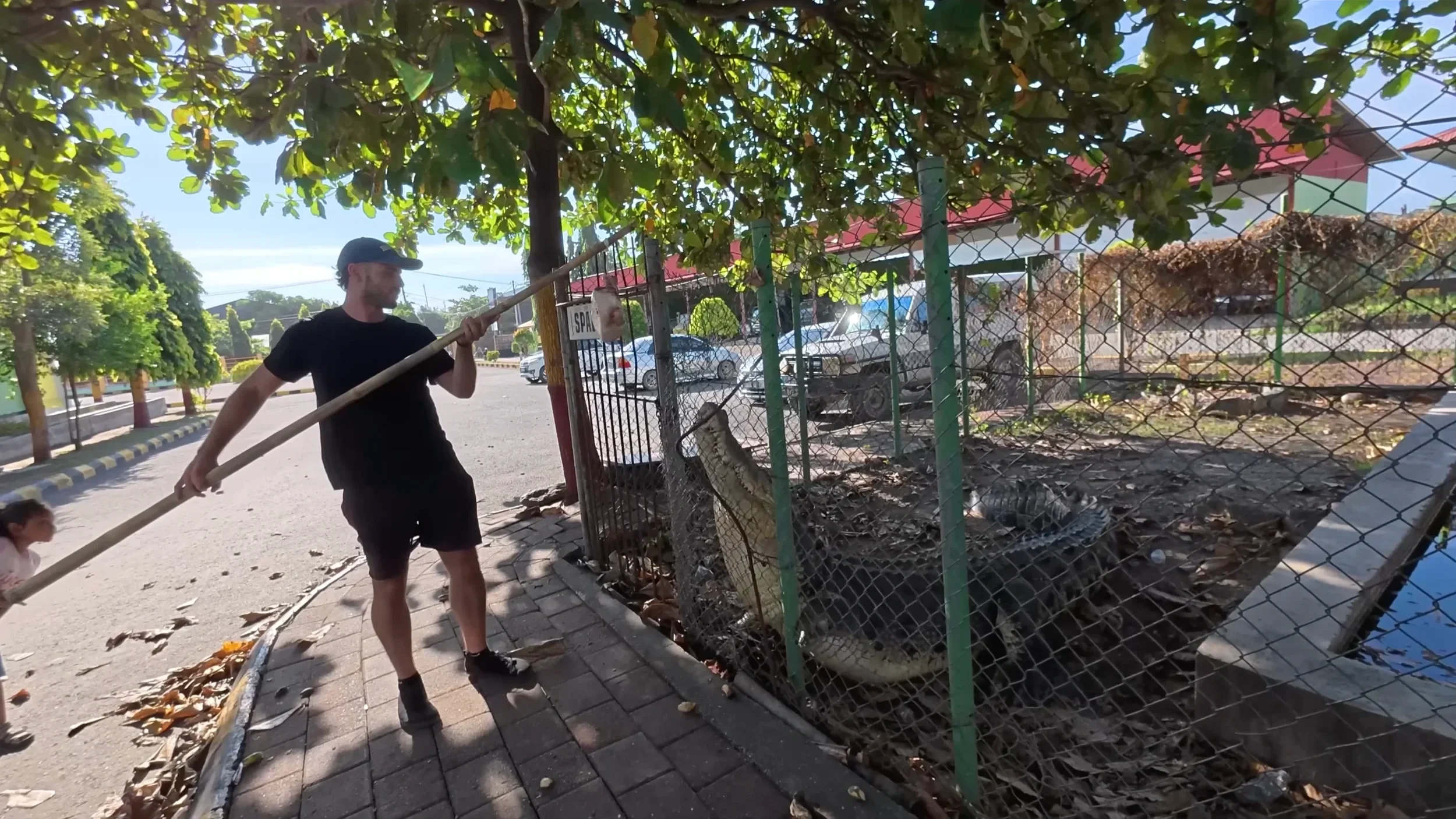
Now I need to explain that the Dili police headquarters has crocodiles. Three of them. Living in enclosures out the front. And if you bring chicken, they let you feed them. It is less a classic police building and more a police park with different small structures, gardens, and of course the animal cages. I thought walking in would be harder but they basically waved me through, which is a strange sentence to type about a police station.
Before entering I bought a frozen whole chicken and a frozen fish fillet from a nearby supermarket for around $16, so my intentions were clear. A soldier named Simeus met me at the enclosures and explained: in 2023, crocodiles were found on the beach road nearby, they were dangerous, so they captured them and kept them here. Three of them. One out front, one around the back, one somewhere in between.
The one out front was enormous. Simeus told me 5 to 7 metres. The enclosure was held together with wire fencing that had visible gaps in it. I fed it a piece of frozen chicken through the wire, which it took immediately, then threw the fish into the air for the one in the back. The catch was instant. No hesitation. The crocodile's name, according to the officers, was Father.
Shout out to the Timor-Leste police. Absolute legends.
Day 2: Renting a Bike and Getting Out of the City
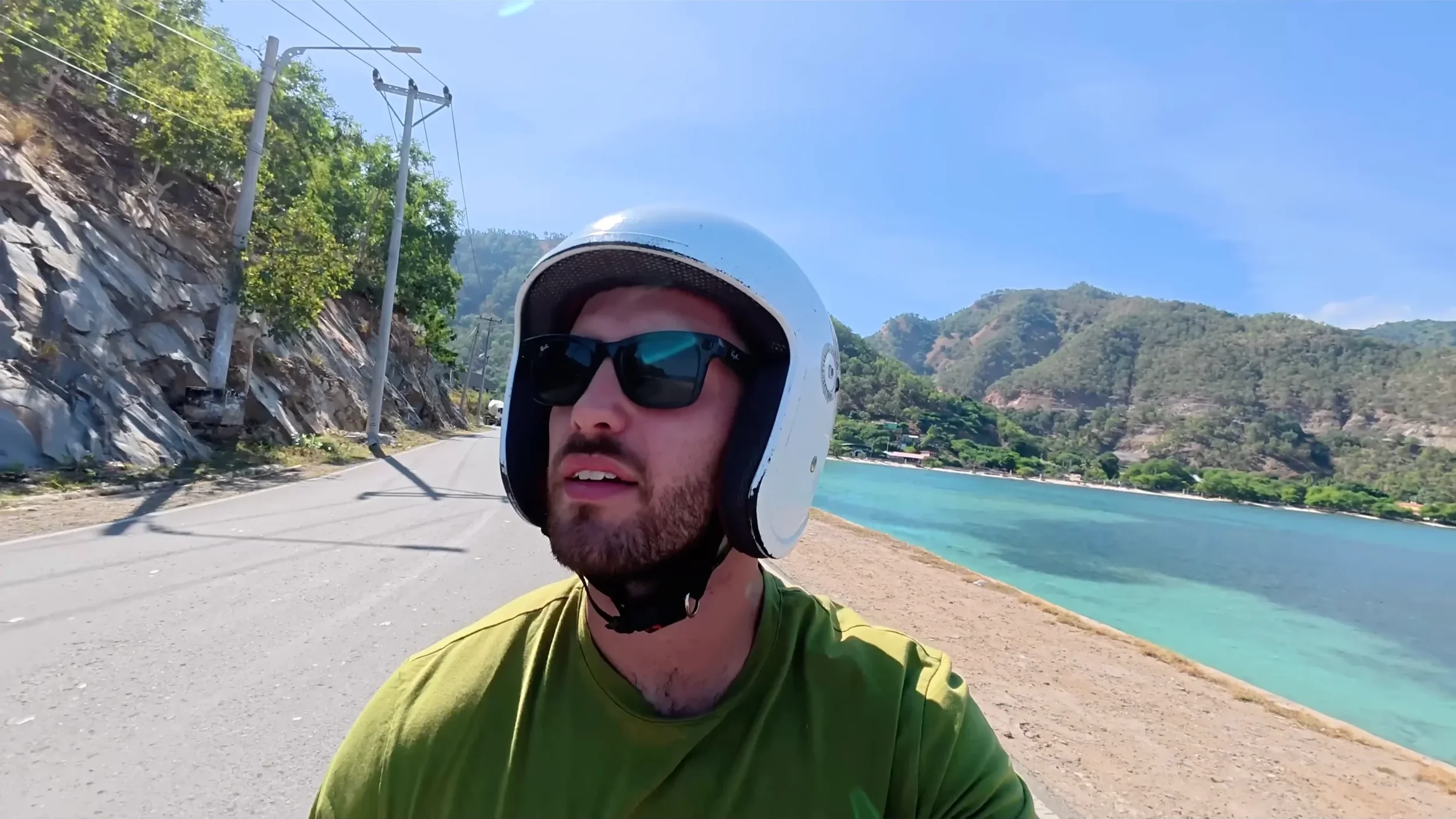
The second morning I decided to rent a bike to explore the coastline. The bike was $25 for the day plus a $5 delivery fee and a deposit. The man who delivered it was named Aion, who told me his name by pointing at his phone and saying "iPhone." Close enough.
The back brake did not work. I know this because I tested it within the first 30 seconds and felt nothing happen. The front brake worked fine, so we committed to that and moved on.
The plan was to head east along the northern coastline toward One Dollar Beach, about an hour's ride from Dili. The road runs along the coast and it is genuinely beautiful. Blue water to one side, mountains to the other, barely any traffic except for a few large trucks. I got stuck behind one for a stretch producing a truly extraordinary amount of exhaust, which I can only describe as worse than smoking 10 cigarettes, and then we were through it and back into the kind of scenery that reminds you why you bother with all of this.
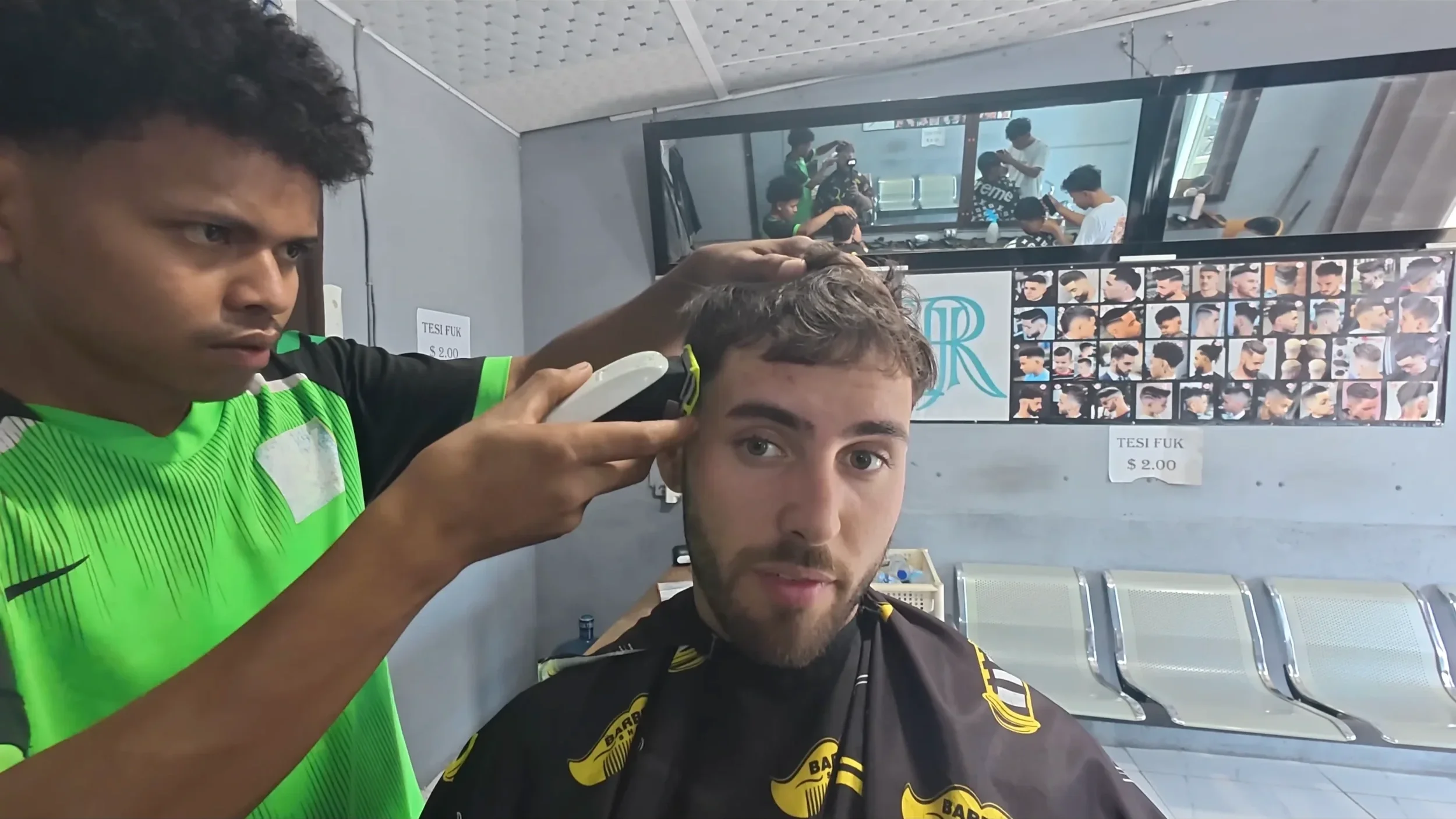
About halfway to the beach I spotted a barbershop and pulled over. I had been meaning to get a shave and this felt like the perfect spot. The barber's name was Pak and he was excellent. He used a razor blade held directly in his fingers rather than in a handle, which I had never seen before and which worked extremely well. Took my hair down with a skin fade, cleaned everything up, and by the end of it I looked genuinely fresh.
The total cost was $2. I gave him $100 as a tip. He was first speechless, and then when reality hit him he started shouting to his friend, hugged me, said goodbye about a hundred times before I was actually able to get back on the bike. He probably made close to a month's wages in that one transaction. I love being able to do that for people and he was exactly the kind of person who deserved it.
The famous $1 Beach
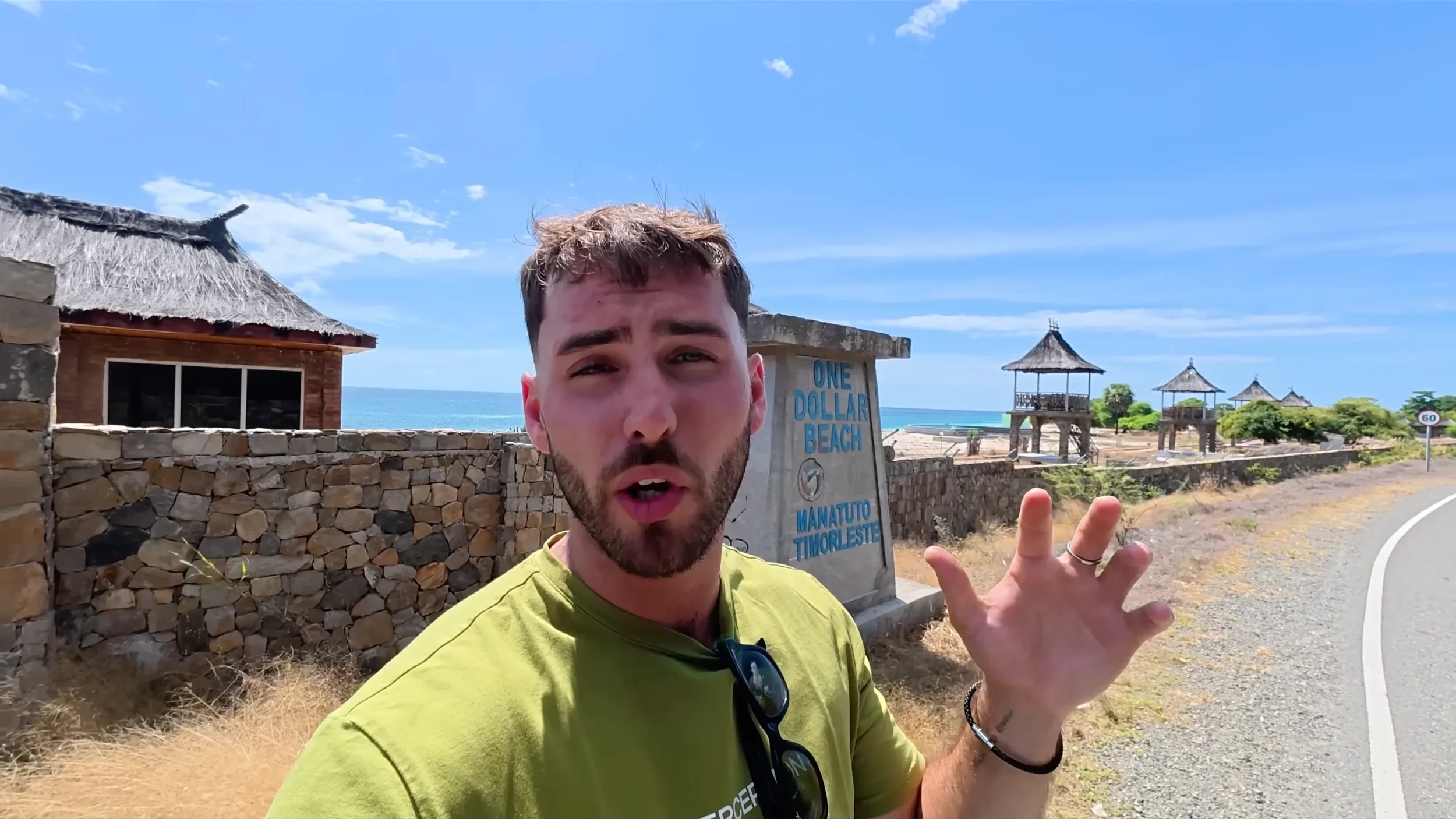
After another 30 minutes or so on the bike I reached One Dollar Beach. It got its name because when the UN peacekeepers were stationed here after the 1999 vote, locals used to charge them a dollar to access this stretch of coastline, and the name stuck.
The beach is locked off behind barbed wire fencing. I could not find a gate but I found a gap low enough to crawl under, which I did without much hesitation, and came out the other side into what I can only describe as an abandoned paradise. Old swimming pools not used in years. Beach bungalows with upstairs seating areas. Turquoise water so clear you can see straight to the bottom.
An hour and a half flight away in Bali, you would pay $100 a day at a beach club for exactly this. Here it was free and completely empty. I went for a swim and the water was perfect. On the way back out I made a comment about hoping there were no crocodiles, and a genuinely inexplicable loud bang went off in the distance at exactly that moment. The timing is not something I can explain and it made me genuinely jump.
Traditional Lunch in the Middle of Nowhere
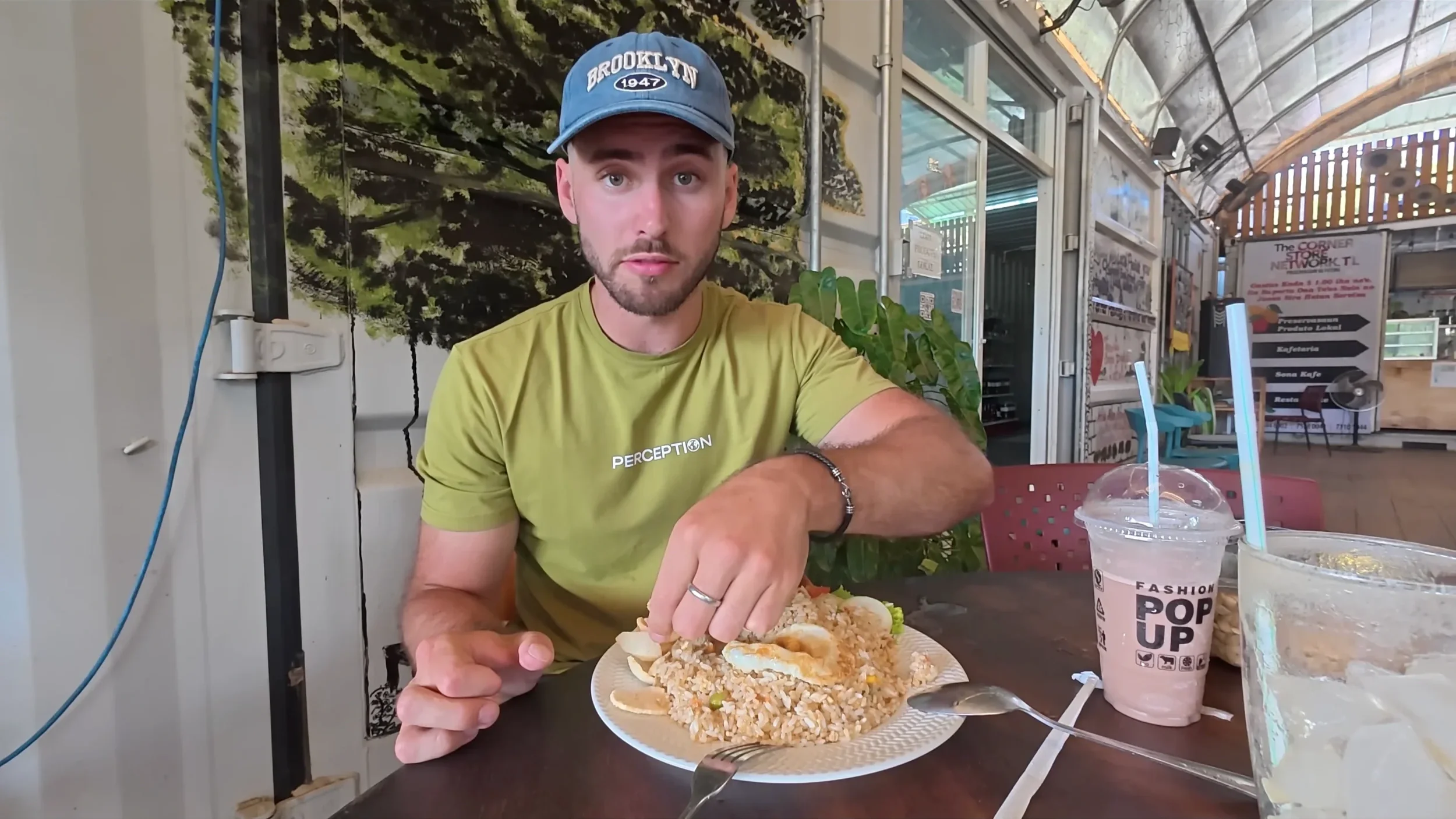
After driving around with no real idea where I was going I found a restaurant on the side of the road, and since it was the only option I stopped to eat. I ordered nasi goreng, essentially egg fried rice with crackers on the side, a chocolate pop ice, and an iced latte. Total came to $6.25. The nasi goreng was plain but good, the crackers were the highlight. I was probably meant to add sauce and spices myself but I travel full time and make videos on YouTube about it, so clearly I have it all figured out.
Back on the coastal road toward Dili I stopped for a coconut from a man named Tito Silva, selling them from a cart on the side of the road. One dollar for what was genuinely the largest coconut I have ever held. Cold water, clean meat. He was a nice guy so I left him $100 as a tip. Word spread almost immediately and within seconds everyone nearby was trying to sell me something. I genuinely wish I could help everyone. Maybe next time.
A few metres further I stopped for roasted corn from a woman named Mashia, 50 cents, which was good but lost most of its juiciness on the coals, as roasted corn usually does. I left her $100 as well. Both times the tip was met with complete surprise and an insistence that it was too much. Both times I insisted more until they accepted.
The Cristo Rei Statue at Sunset
Last stop of the day was the Cristo Rei statue. It was gifted to Timor-Leste by the Indonesian government in 1996 and stands 27 metres high, and that height was deliberate. It was built to mark Timor-Leste as the 27th province of Indonesia. The country got its independence 6 years later and the statue is still standing, which says something interesting about how history works.
It is the 6th largest statue of Christ in the world, with the top 2 being in Brazil. I drove up for sunset and completely misjudged the entrance, parked at the wrong end of the hill, and by the time I realised the actual walking path was in the other direction the sun was already going down. I had to come back in the morning before my flight. Which I did. The views from up there are worth it either way.
Does Timor-Leste Deserve More Tourists?
I came here with one question and I think the answer is yes.
It is not a polished destination. The roads are rough, the immigration process is a genuine test of patience, and $95 for a hotel room that looks like a minimum-security facility is a lot to ask of a traveller. The infrastructure is still catching up to what the country went through, and that takes time.
But the people are some of the friendliest I have encountered anywhere. Genuinely happy to see you, genuinely interested in who you are and where you came from, not in a transactional way but in the way that people are when visitors are still rare enough to be interesting. The natural beauty is untouched. The coastline is stunning. The history is heavy and worth understanding before you go.
It is a country that has been through a great deal and is quietly getting on with it. The least you can do is show up.
-
Need an eSIM when you travel? Check out Globie eSim →
Want daily emails from me? Sign up here →