Syria’s City of Ghosts: Jobar
There are some places in the world that stop you in your tracks. Not because they're beautiful, but because the weight of what happened there hits you differently. Jobar is one of those places.
Ten minutes outside of Damascus. That's all it is. And yet you're looking at what can only be described as the end of the world.
The City That Held Out
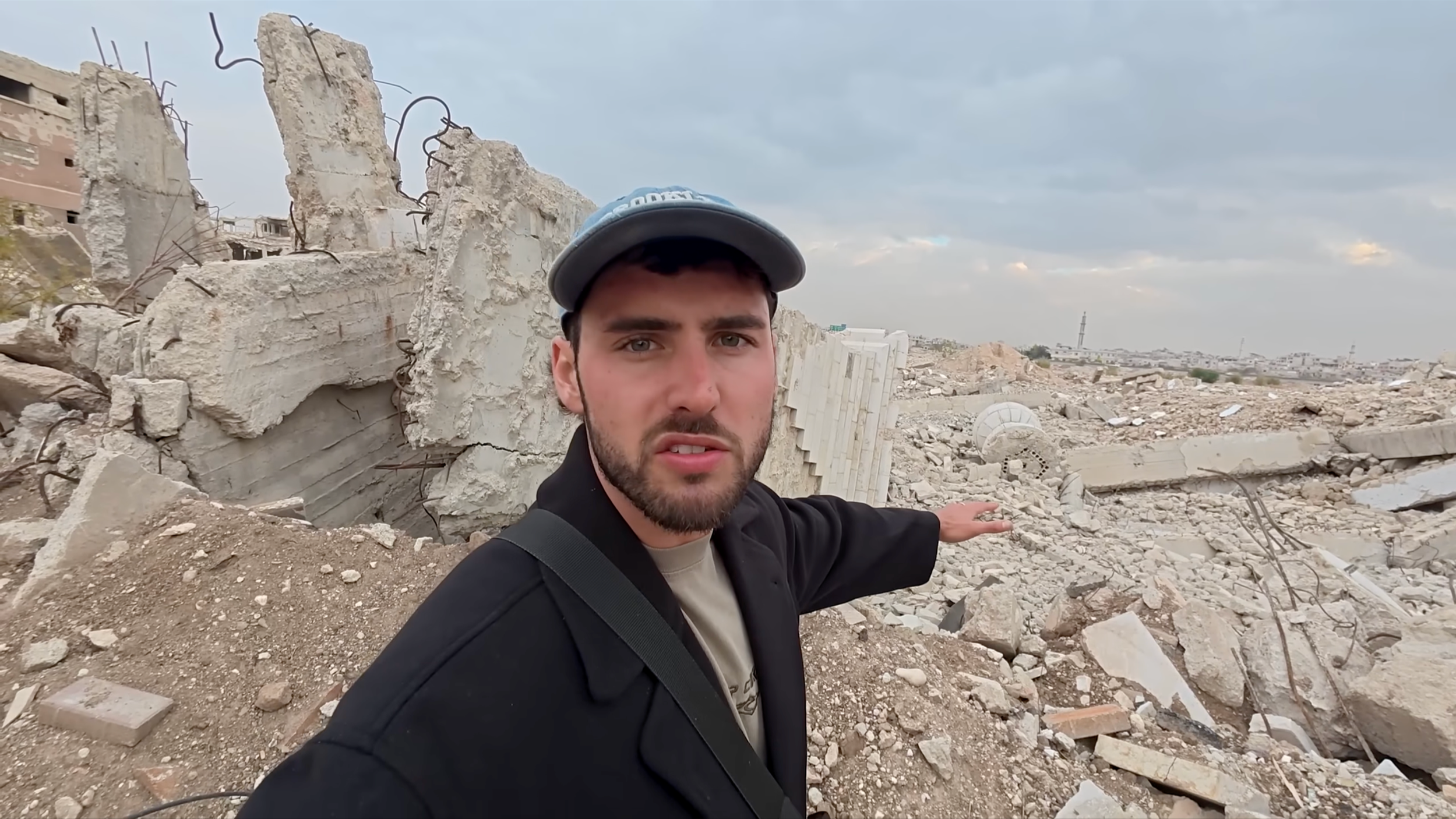
Exploring around Jobar area
Jobar wasn't just another neighbourhood that got caught in the crossfire. This place was a stronghold, when the Syrian revolution started in 2011, Jobar became one of the first areas where people rose up against Assad, and crucially, it became one of the only places he was never able to fully enter for almost a decade.
The reason? An underground tunnel network stretching across the entire Damascus countryside, dug by the revolutionists themselves, with their own hands. While Assad's forces were above ground trying to bomb them into submission, they were below it, connecting neighbourhoods, moving weapons, running ambulances through the dark.
The price for that resistance was everything you see above ground. Because if Assad couldn't get in, he was going to make sure there was nothing worth getting into.
What used to be one of the richest areas in Damascus is now a ghost city. Minimum 100,000 families once lived here. Now it's rubble, street signs, and a few kids with a tyre.
Going Underground
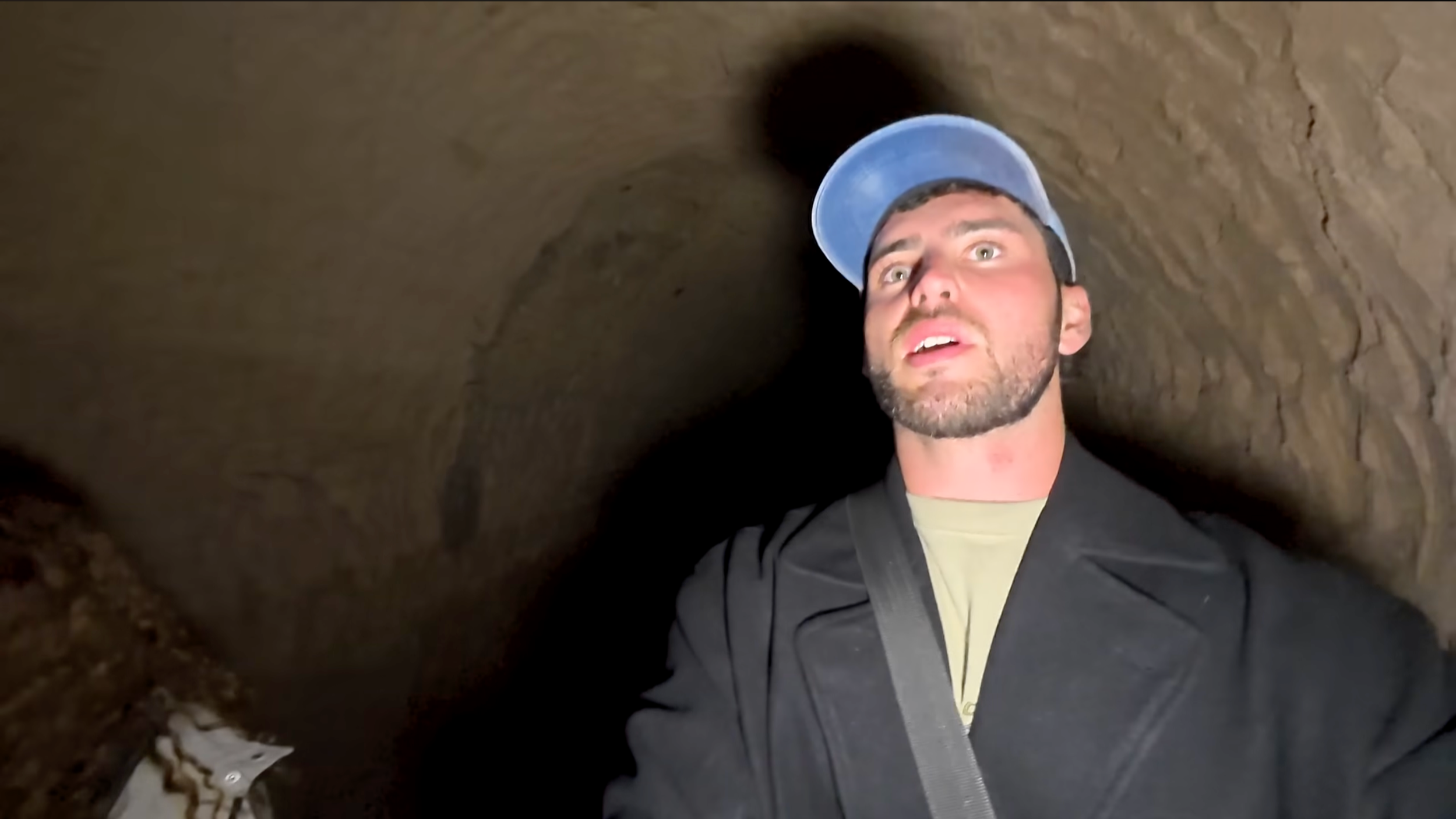
Inside the most dangerous tunnel in Syria
I was able to get inside one of the tunnels. Which, in hindsight, was both the coolest and most questionable decision of the day. I’m a bit of a pussy when it comes to tunnels and tight spaces… I don't love the idea of being inside a collapsing underground passage where the infrastructure was already being eaten alive by years of rain and neglect.
The main tunnels were built wide enough for cars and ambulances. There were rooms carved out for weapons storage. Side passages branching off in every direction.
I was joined on this journey with my friend Rita, who told me about a story where the man who started digging these tunnels, when he was 13 years old. Assad's forces had killed his mum and his dad. His mum died in his arms. And so he picked up a shovel and he spent years of his life underground, building the infrastructure of a resistance. There are cracks running through the walls down there and the ceiling shifts when it rains.
What Assad Bombed First
There was a mosque right near one of the tunnel exits, when the revolutionists surfaced, they’d pray, and go back down. Assad found out. So he bombed the mosque.
He bombed the girls' school too. And then the surrounding streets, the homes, the architecture that had been standing for hundreds of years.
The most concentrated destruction came in waves across 2012, 2014 and 2016. Then in 2019, Assad and Russia gave the remaining population an ultimatum. Leave or we finish what's under the ground too. By that point the revolution had been ground down by years of chemical attacks, starvation and sheer attrition. People were shipped to Idlib in the famous green buses.
The Kids With the Tire Shop
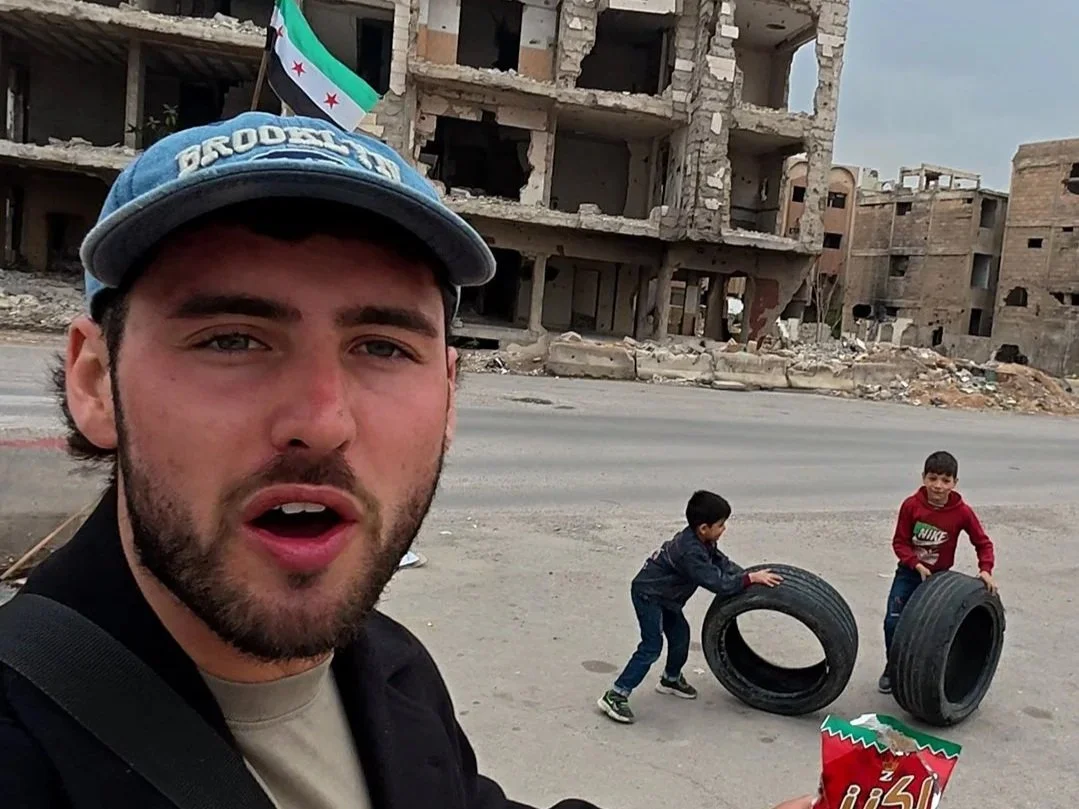
Two boys having fun with a tire
We came across two boys who had set up a little shop among the ruins, selling chips and snacks. Eight years old, roughly, though one of them didn't actually know his own age. They come in every day with their uncle from a town in the Damascus countryside because the family lives elsewhere now. This is their commute. This is their job.
These are the moments that are sad to me. I’m extremely blessed in being able to do what I do and see the world. But for many around the world, when they see the rest of the world for the first time, that's when they'll realise they never really got to live a childhood.
Because of the sanctions, Syria has been producing its own version of basically everything for years, and I tried the Syrian chips… excellent taste. Twisty little pasta-shaped things, a bit vinegary, crispy, different shapes.
Getting Lost, Getting Out
At some point we became properly lost. Not "oh we took the wrong turn" lost. More like "it's getting dark, there are extremists in the area, there may be landmines, and I genuinely cannot see a way out" lost.
The landmine thing came up about halfway through the visit, which was a timing I appreciated very much. Nothing like finding out there might be explosives in the ground after you've been wandering through rubble for two hours in the wrong shoes.
Eventually we spotted a car, made it to the highway, and reestablished contact with civilisation. We hitchhiked back on a motorcycle, three people, no helmets, through the streets of Damascus. The police didn't care. Nobody cares. Welcome to Syria lmao.
What Jobar Actually Is
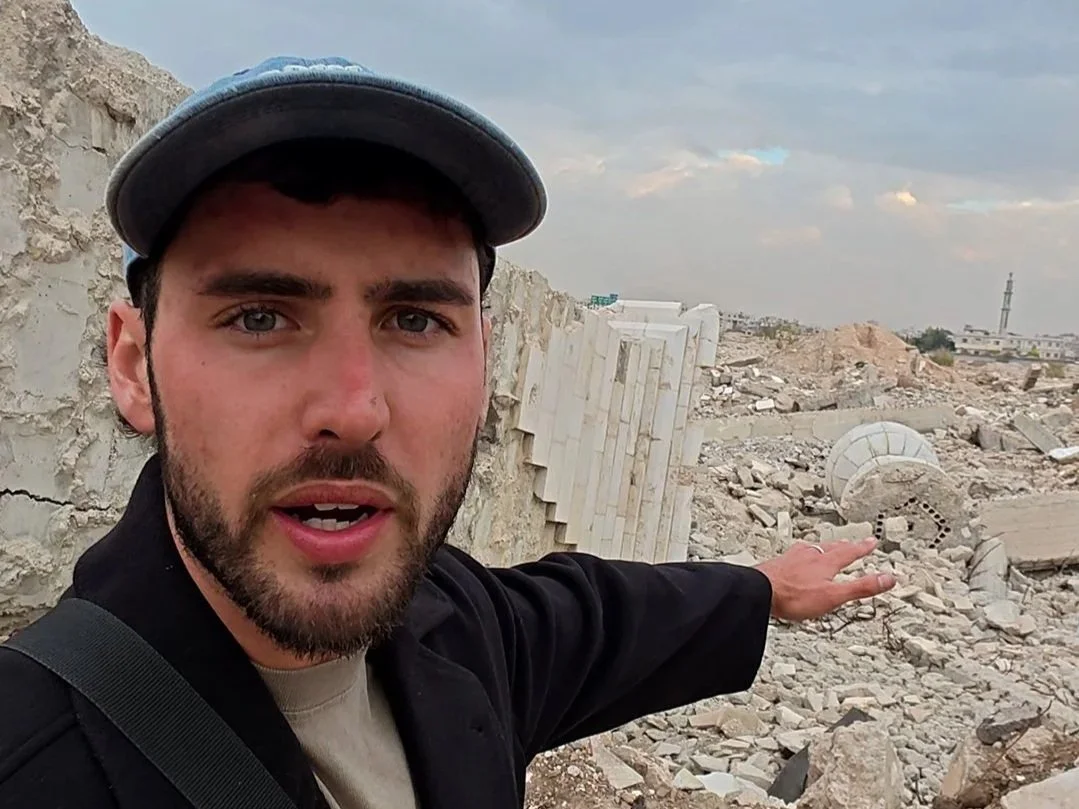
Jobar, a Destroyed City
I climbed up into one of the buildings near the road to get a better look at the scale of it. Half a kilometre of destruction in one direction. Hundreds of metres in the other. A highway cutting through the middle that people still use every day.
Some of the buildings closest to the road have kept bits of themselves intact. Tiles still on the floor. Wiring is still hanging from the walls. You can almost see the apartment it used to be.
The Russian involvement here is something I hadn't fully grasped before visiting. Over my 3 weeks in Syria, I came to realise just how complex Syria is. Not only the Russians… but the Americans, Iranians, Israelis and many other militia groups involved for their own purpose.
However, with Jobar, Russian soldiers were teaching Assad's forces how to operate and maintain aircraft, how to build bombs. Russia ran political cover at the UN, kept Assad in power through the worst of it, and sheltered him when he finally fled. He's in Moscow now.
The irony of all this. In 2019 when the remaining Jobar residents were shipped to Idlib, they weren’t happy. 5 years later the Syrian liberation started from that city. The people who were forced there finally taking back what was once theirs.
Need an eSIM when you travel? Check out Globie eSim
Want daily emails from me? Click here