I Visited the World's Poorest Country and I'm Never Going Back.
There are trips you plan because you want to go, and then there are trips you plan because you feel like you have to. Burundi was the second kind. A country in East Africa that consistently ranks as the poorest in the world, with an average monthly salary of around $15, a government that has spent years sliding toward authoritarianism, and a population that has lived through civil war, coups, and crises that most of the world never noticed. Not exactly a typical travel itinerary.
I knew going in that this was not going to be an easy trip, or a fun one in the conventional sense of the word. But I always go in with an open mind, and I genuinely believe there is value in showing up to places the travel industry has quietly decided to skip. So we went.
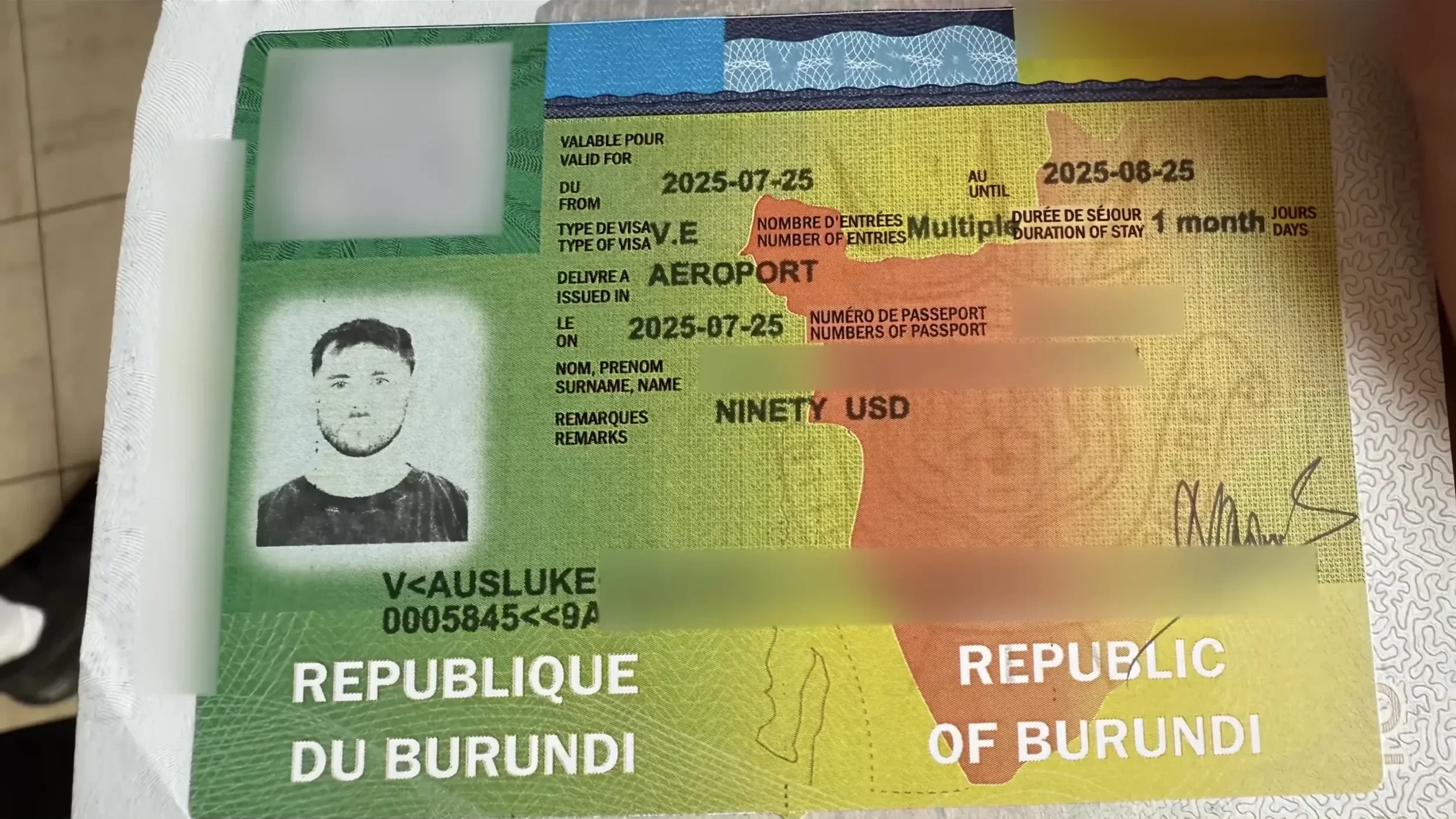
I landed in Bujumbura with my friend Kieran and got through immigration without too much drama. The visa was $90 for 30 days and honestly one of the best-looking visas I have ever received, which might be the only straightforwardly positive thing I can say about arriving in Burundi. We found a taxi driver outside the airport called Alexis and he drove us to the hotel.
He quoted $20 for the ride, then decided once we arrived that $20 was too small and tried to renegotiate. I had actually been considering giving him $100 during the drive, but he spent most of the journey shouting at random pedestrians out of the window, so I gave him the $20 we agreed on and called it there.
The roads, I will say, were surprisingly good, better than Uganda, which still baffles me. But almost every petrol station we passed was closed because there was no fuel. The fuel crisis here is real and the black market for it is just as real. You can apparently get it smuggled in from Congo at around $6 per litre, which is a staggering number when you consider what people are earning.
Speaking of the black market, the official exchange rate was around 2,800 francs to the dollar when we arrived. The black market rate was sitting close to 7,600. Nearly triple. So naturally, the first thing on the agenda was finding someone who could sort us out.
We went out and bumped into a random guy on the street who pointed us to another guy, who pointed us to a spot, who told us to wait on the side of the road while someone drove over. It felt exactly like a drug deal. Since 2024 the government has been cracking down hard on black market exchanges and people have actually been arrested for it, so the whole thing had this slightly paranoid energy where nobody wanted to be standing in the open for too long.
We exchanged $200 and ended up with what felt like an absurd amount of cash, a mix of 10,000 and 5,000 franc notes stuffed into various pockets. Then our driver tried to renegotiate his own fee on the way back. He had quoted 15,000 francs ($2). We gave him 30,000 ($4) because we had gone to two locations, which was fair. He still looked like he wanted more.
The Bribe
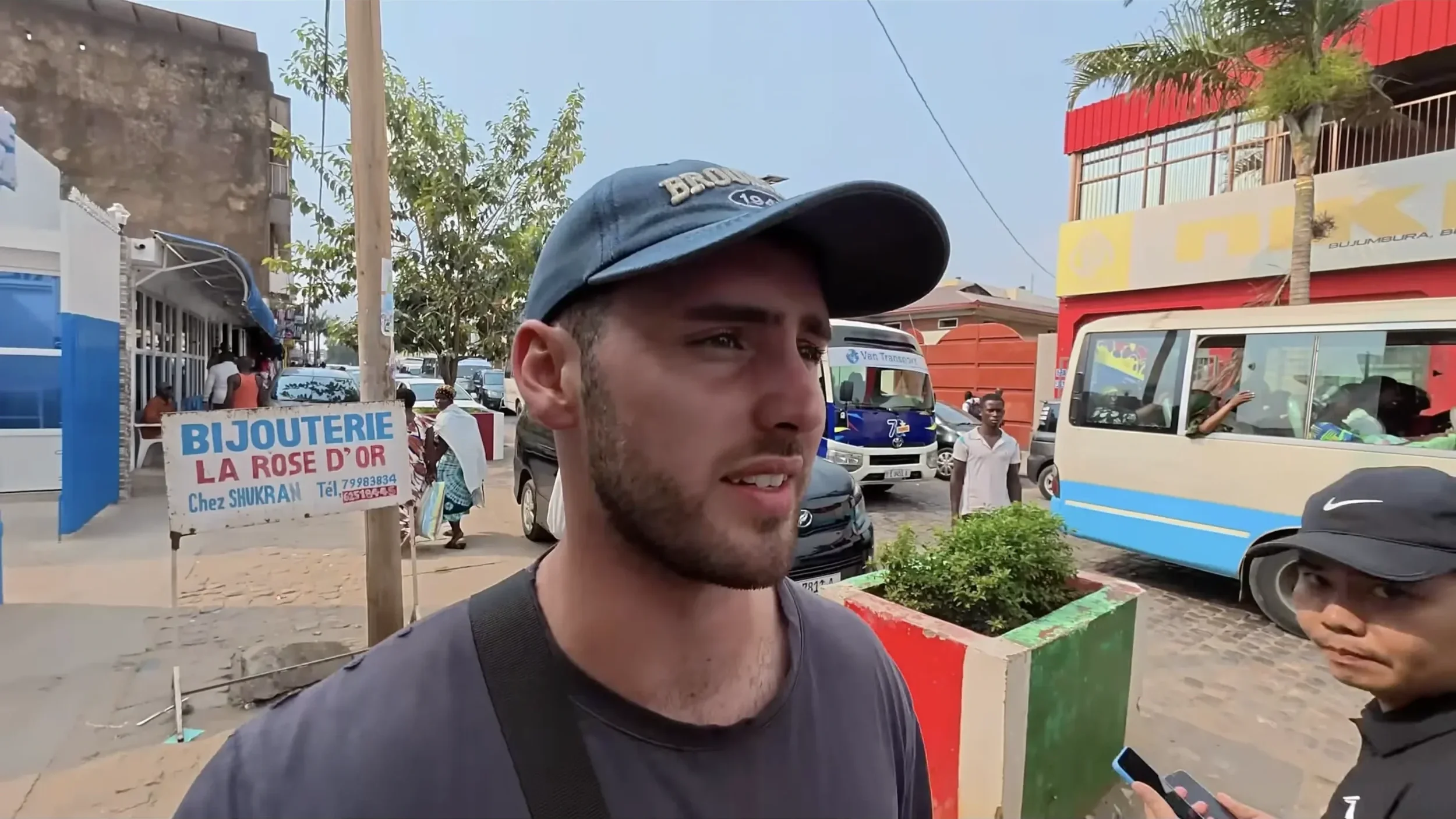
Next thing to do was get SIM cards. Kieran and I decided to walk through town looking for one and I was filming the whole thing with my camera out, as I always do. After a few minutes of walking we found people on the street selling SIM cards, and as I started filming and asking about prices, a police officer came over aggressively and confiscated my camera.
I do not speak French and he did not speak English, but the message was clear enough: I was not allowed to film without a permit. One of the SIM card vendors tried to help translate, though I had a strong feeling he may have been part of the arrangement.
What followed was about 10 minutes of the most exhausting back and forth I have had in a long time. I pointed at the camera. He shook his head. I pointed at the street. He shook his head again. I tried explaining that I was a tourist, which required miming the concept of tourism to a man who was not interested in the mime. He held the camera up. I held my hand out. He put the camera down behind him. At some point a small crowd gathered to watch, which helped nobody. I kept my voice calm because there was a gun involved and that felt like the right call.
After 10 minutes of this, he made the universal gesture for money. "Breakfast" as they call it in this part of the world, which is the local term for a bribe. We eventually landed on 50,000 francs ($6.60) to make the situation go away. I went around a corner to do the handover because I was not pulling out a wad of cash on an open street, and finally got my camera back.
The SIM card itself was another 20,000 francs ($2.60), though I had no way of verifying whether that was accurate, so I paid it. Then there were some additional fees he supposedly needed on top of that.
Total cost to film and have a phone number in Burundi: 80,000 francs ($10.50). And just like that, one bribe and one SIM card later, I just wanted pizza.
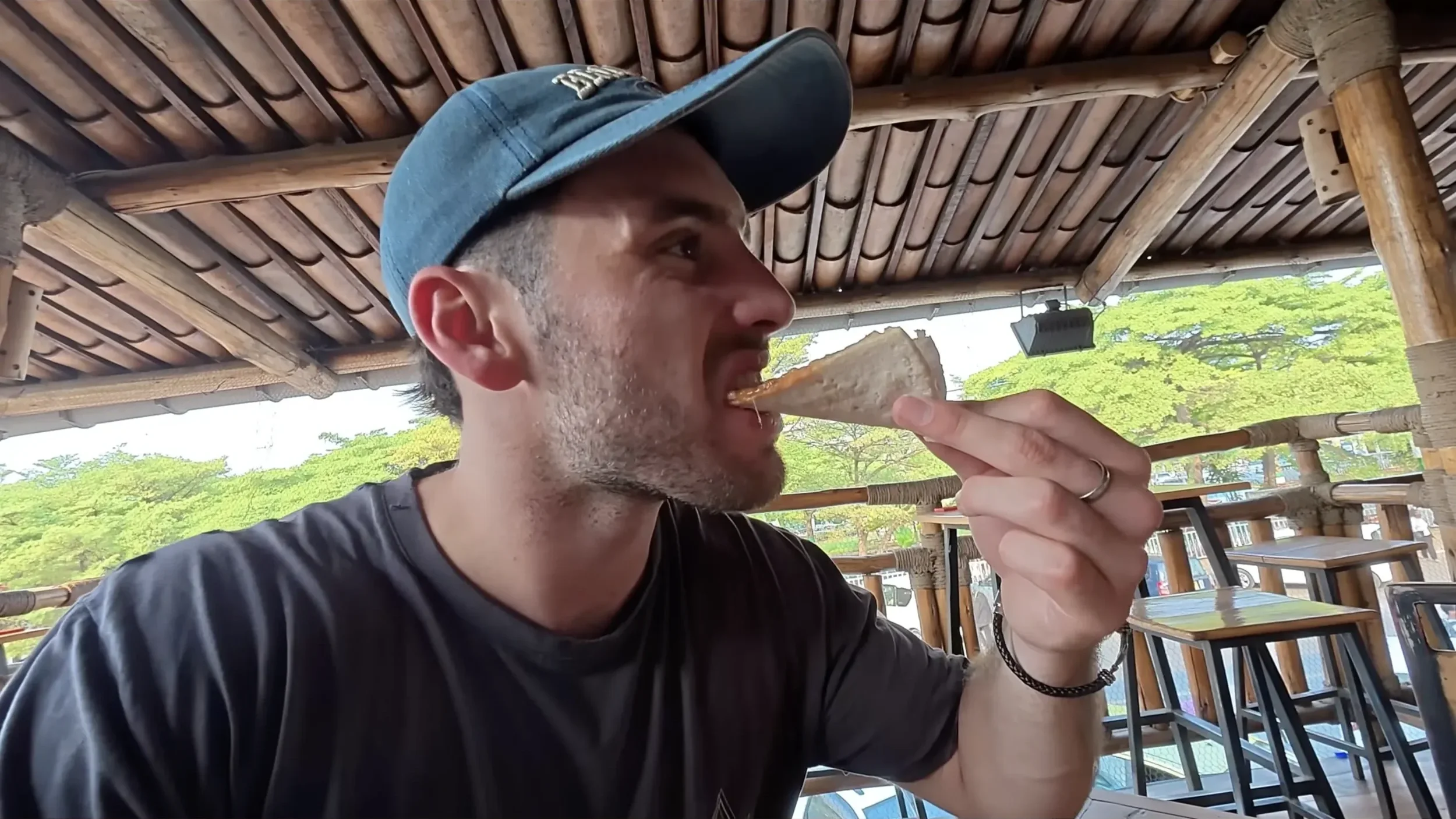
We found an Italian place called Waka Waka and it was exactly what I needed. The four cheese pizza came out looking genuinely good. Homemade dough, very thin, properly done. I gave it an 8.6 out of 10, which takes into account that we were in Burundi. In Italian standards it was probably a 3, but it was just what the situation called for.
The bill for everything came to 143,000 francs, which is around $18.80 at the black market rate. If you had paid by card or withdrawn from an ATM at the official rate, that same meal would have cost you $47. The dual pricing reality of this place is something you feel constantly.
We got a taxi back to the hotel and our driver Eric told us he had queued at 2am that morning just to try and get fuel. We had agreed on 15,000 francs ($2) for the short ride, and he explained that normally he would have charged 10,000 ($1.30) but the fuel costs had pushed it up. I gave him 30,000 ($4) and told him he was a good guy, because he was. He was the first person in the country who had not tried to squeeze us.
At that point, we called it a day and went to sleep.
The Weirdest Hotel I’ve been to.
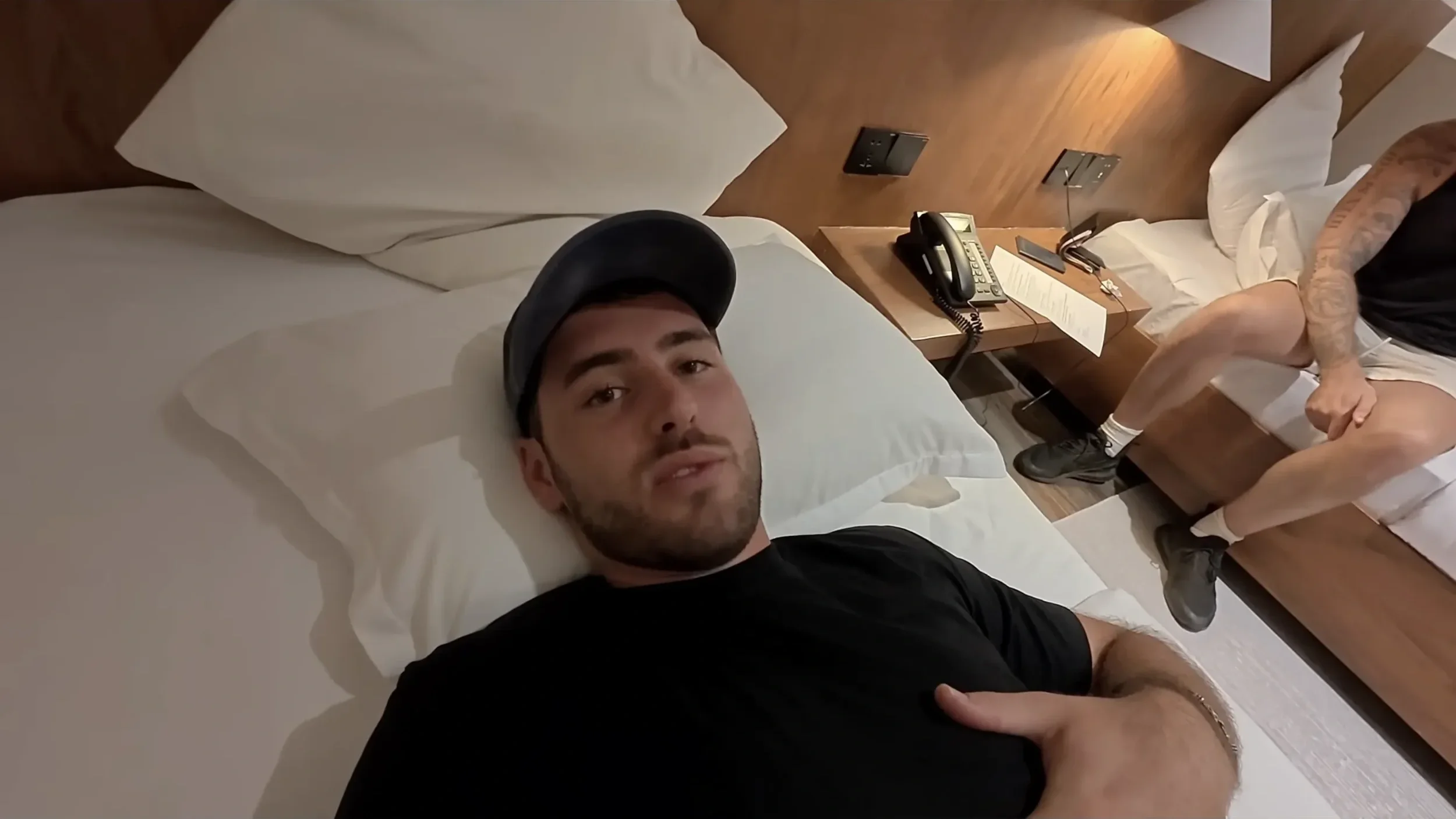
We spent our first night in one of the best hotels in Bujumbura for $120 a night. The Wi-Fi did not work. The AC was terrible. There were cockroaches. The beds were aggressively springy in the worst possible way and Kieran woke up the next morning barely able to walk from the back pain, though in fairness he is getting old. So, we decided to move somewhere else first thing in the morning.
I let Kieran book the next room, which in hindsight was my mistake. He went for the most expensive hotel in Burundi at £222 ($280) for two nights, so the expectations were appropriately high. With Kieran though, you never quite know what you are walking into.
The room was actually great, except for one detail. The bathroom had no door. Not a broken door, not a curtain, but no separation whatsoever between the toilet and the sleeping area beyond a small half-wall that came up to about hip height. So as I sat there trying to take a dump, I was also fully able to make direct eye contact with Kieran lying on his bed across the room.
The shower was in the corner and similarly lacked any visual boundary between bathroom and bedroom. There was technically a blind spot in the corner of the shower, but it was not covering much. The architect made a choice and we were living with it.
That was the last time I let Kieran choose a room.
The Zoos in Burundi are next level weird.
Sunday in Bujumbura is quieter. It is a majority Christian country and a lot of things close, so the streets calm down and the city takes on a slightly different energy. I decided to go to the zoo.
I paid the $4 entrance fee and inside I met Fabi, who was going to show me around. He was warm, clearly passionate about the animals, and very good at his job. The zoo itself, however, operates on a philosophy that could best be described as anything goes.
The first thing he showed me was a monkey. Friendly, curious, ate a banana out of my hand. A perfectly normal zoo experience. I did not realise at the time that he was easing me in.
We walked over to a cage with a leopard inside. Fabi turned to me and asked if I wanted to feed it. I said yes, assuming this meant some kind of meat or prepared food. It did not mean that. Fabi disappeared to the back and returned holding a live guinea pig by its body, completely calm about it, and tried to hand it to me. I took one look at the situation and said absolutely not. I stepped back and let him handle it.
He threw the guinea pig into the cage.
The leopard spotted it immediately. There was a pause, that horrible kind of quiet where you know exactly what is about to happen, and then the leopard moved. Not a sprint, just a deliberate, purposeful walk that closed the gap in seconds. The guinea pig started screaming, a sound I was not prepared for, and then the leopard was on it, claws down, and it was over. The bite to the neck was fast. The screaming stopped. I stood there in silence for a moment not entirely sure what I had just watched unfold.
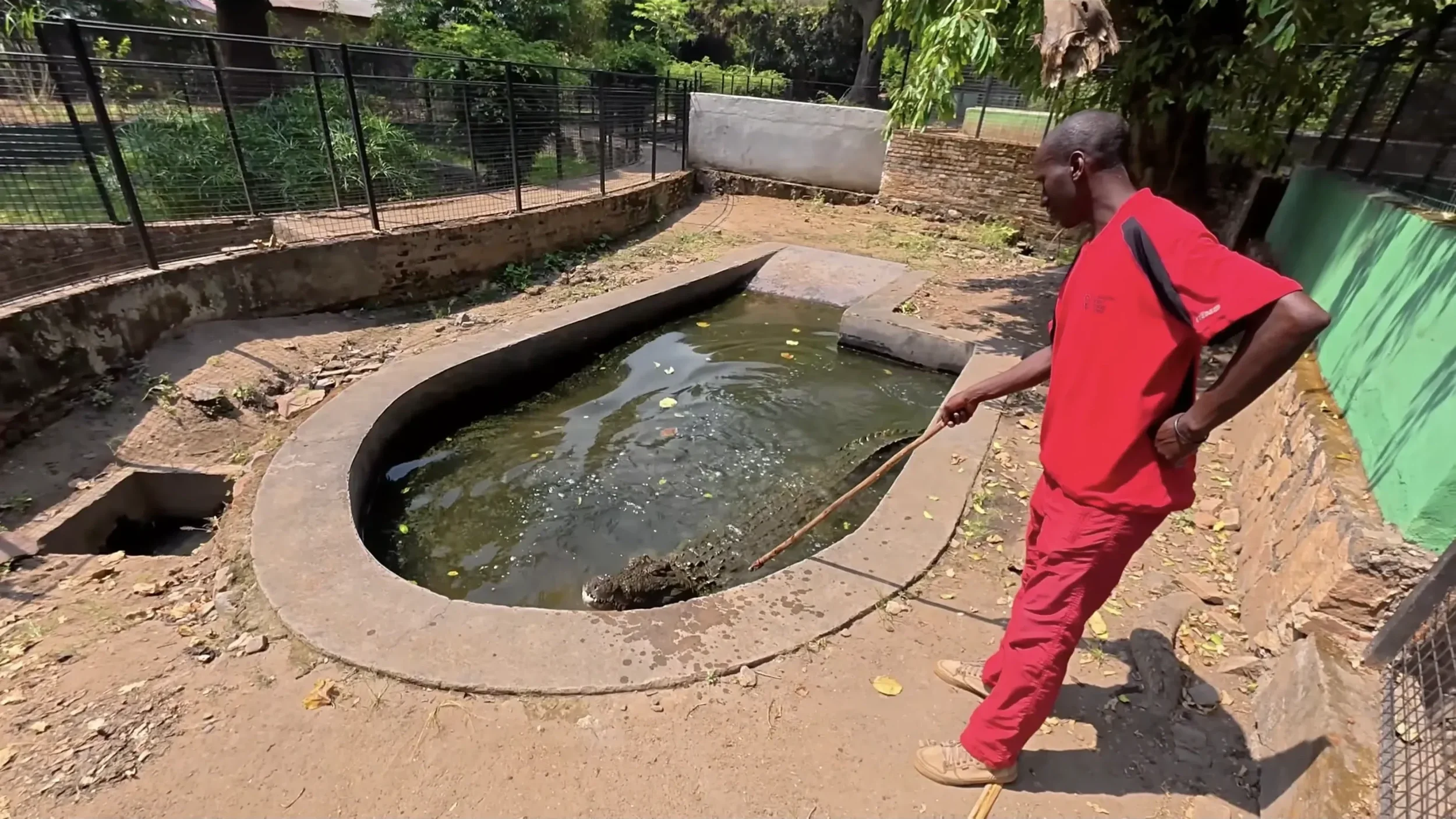
Next up, the crocodile pit. This time Fabi did not ask. He just took another guinea pig from somewhere and launched it in before I could process what was happening. The crocodile did not need long. One fast lunge, one snap, and it was done. I could hear the bones. I had goosebumps running down my arms and I am not someone who gets goosebumps easily.
Then Fabi showed me the biggest crocodile they had. He walked into the enclosure with it, which was a large open-air pond at ground level, and asked if I wanted to get in and take a photo with it. I was genuinely considering it right up until the moment he poked the crocodile with a stick to show me how it reacted. The crocodile snapped sideways and bit the air with a crack that I felt in my chest. That was all I needed. I declined.
There were other visitors watching, all locals, and I paid for one of them to take the photo with the crocodile instead. They did it without hesitation and everything was fine, which somehow made it worse.
After that, Fabi took me to the chimpanzee area. This one was considerably more wholesome. Fabi turned out to be something close to a primate whisperer, and to call the chimps over he started making sounds, proper deep chimp calls that echoed around the enclosure, and one by one, then all at once, more than 20 chimpanzees came running and calling back. The noise was extraordinary. One of them knew how to do a backflip and Fabi held out a banana as a reward while somehow communicating the request. The chimp did the flip. He got the banana. Everyone was happy.
To close the day, Fabi pulled a python out of its enclosure and held it toward me. I declined. He showed me the poisonous snakes behind glass. I looked at them from a respectful distance. And that was the zoo.
Before leaving I gave Fabi $100 because he was genuinely excellent at his job and completely honest the entire time. Those are the people who deserve to be rewarded wherever you find them in the world.
Drinking a beer with the locals
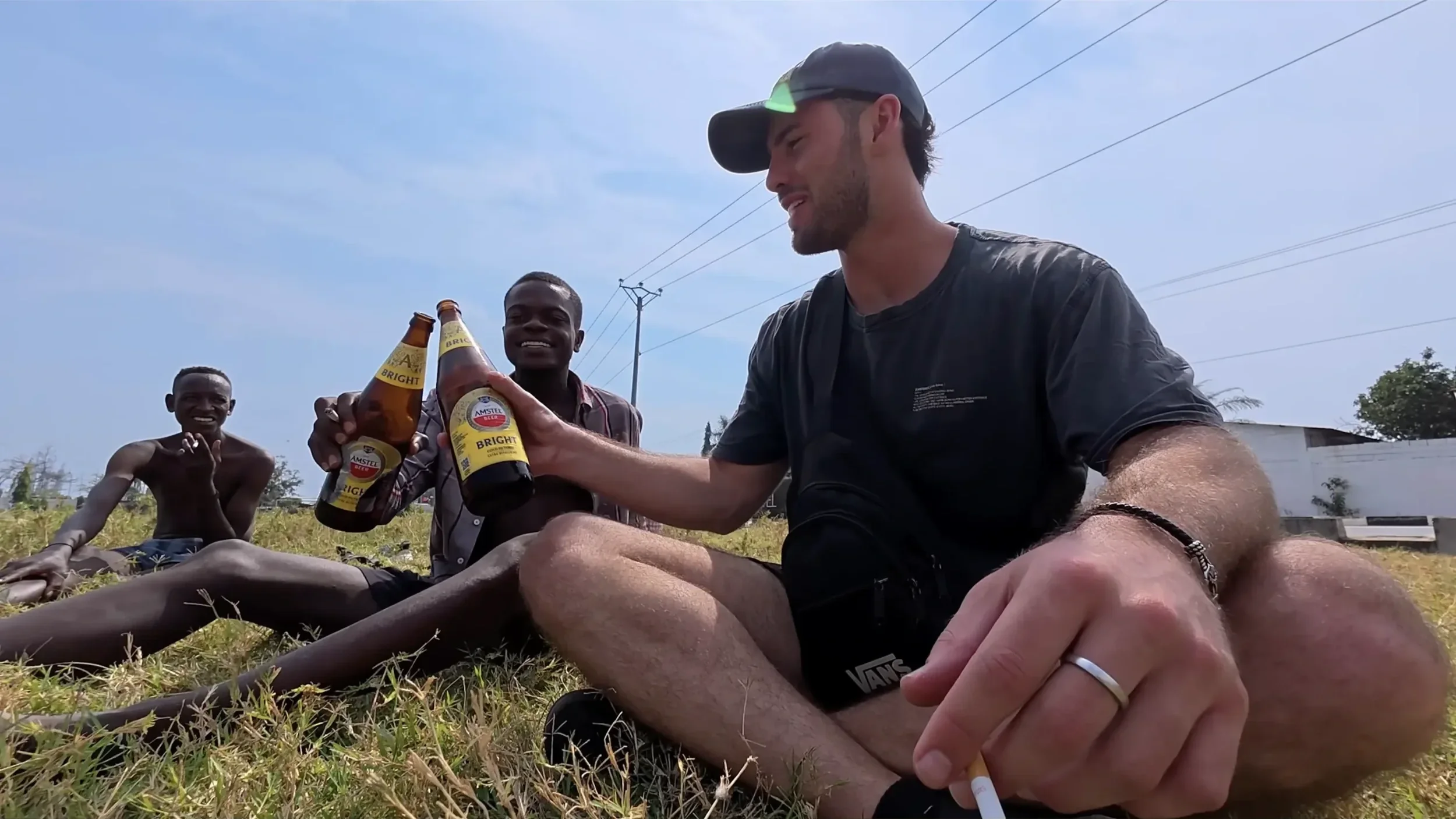
On the way out of the zoo I met Ivan. He was washing his clothes in the drain nearby, we got talking, and within a few minutes we were sitting in a local spot watching football and drinking Amstel. 650ml bottles at 5%, two of them for the equivalent of about $1.50 combined. Ivan had just finished school, had his driving licence, but no car because of the fuel crisis, and no job. He told me that some mornings there was nothing to eat.
His dream was to fly to another country. Just to get out.
We talked for a while and I ended up giving Ivan and his friends $100 and told them to split it equally. The YouTube comments after I posted the video were fairly unanimous that he did not split it. I understand though. When you are that close to nothing, you do what you have to do. I still believe in karmic consequences.
We also smoked Super Match cigarettes, which are the cheapest available in Burundi and come in packaging that is essentially just paper. They cost 5,000 francs ($0.66) for a pack, were extremely strong, and tasted like regret. I gave them 7 out of 10 for the experience.
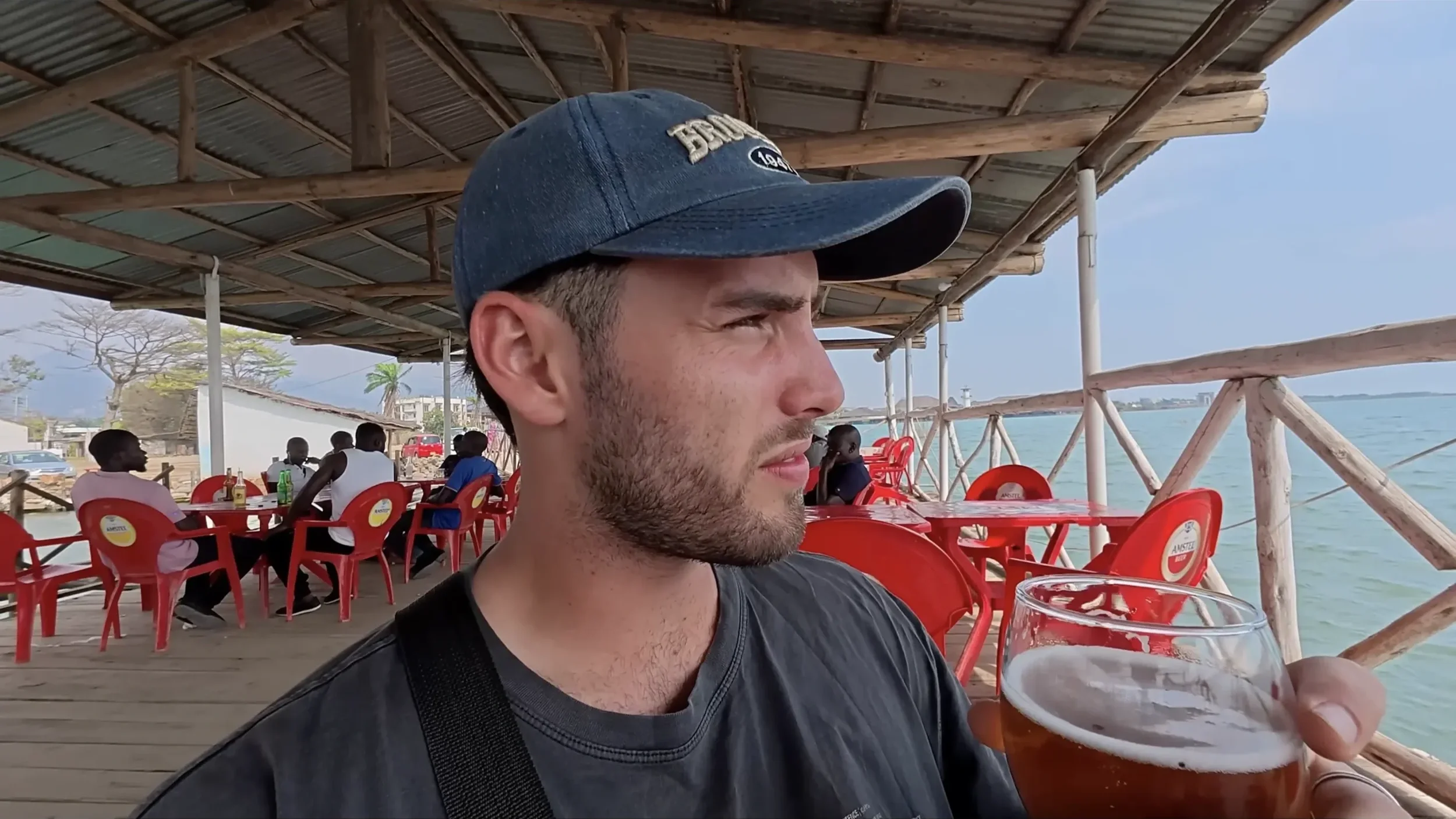
After that I headed over to Lake Tanganyika, the largest lake in the country and one of the deepest in the world. I got another beer and sat there thinking about the view. On one side, a lakeside bar, a warm evening, cold Amstel. Not bad. And on the other side of the water, maybe 20 or 30 kilometres across, was the Democratic Republic of Congo. A country where over 8 million people are internally displaced, where 26.6 million face acute food insecurity, where rebel groups have spent decades fighting over land rich in cobalt and coltan, minerals that go into the phones and laptops we use every day while the people who mine them live in poverty.
A country where 75% of the population lives below the poverty line despite sitting on some of the largest natural resource reserves in the world, and where disease outbreaks, cholera, Ebola, malaria and mpox move through communities with almost nothing in place to stop them. It was sitting right there, on the other side of that water, and the contrast with the beer in my hand was not lost on me.
I finished the drink and headed back to the hotel. The walk back from the lake involved a partially flooded road and a small river crossing that I did not make cleanly, ending with a completely soaked left foot. The road had not even flooded from rain. The lake just rises and takes the road when it feels like it. There was no rain the entire time we were in Burundi and that road was gone. In the rainy season the roads apparently get decimated completely, and there have been hippos wandering into neighbourhoods around the city when the water gets high enough.
Back at the hotel, Kieran and I went out looking for dinner and found an Indian restaurant called Paparazzi Bar a few minutes away. We got Serengeti beers in, which are Tanzanian and actually pretty decent. Kieran rated his paneer butter masala a 6 out of 10. The cheese naan was extremely oily and came in at a 4. I had the paneer butter masala too and thought it was solid for Burundi. The full meal for two came to just over $18.
Keep in mind that night we were sharing a bathroom with no door and no ventilation, and had just eaten a fairly aggressive amount of Indian food. Kieran and I's friendship definitely reached new levels that evening.
Final thoughts
Kieran summed it up best. One and done.
I am genuinely glad we came. I think it is important to show up to places like this, to put money directly into the hands of people who need it rather than skipping over countries because they are difficult or uncomfortable. But I am not going to romanticise it. The corruption is constant and exhausting. The military presence in Bujumbura is everywhere and it is not subtle. People carrying AKs and RPGs on street corners is not a background detail, it is the environment. And the poverty is the kind that stays with you, not because it is dramatic but because the people inside it are so ordinary, so capable, and so completely stuck.
There are genuinely good people here. Fabi at the zoo. Eric the taxi driver who queued at 2am for fuel and still did not try to overcharge us. Ivan with his driving licence and nowhere to drive. A country full of people with dreams and almost none of the conditions required to make them happen.
I like to think I can do more in places like this. But I also never want to sugarcoat an experience. I will tell the truth and share what I actually saw in every country I visit, and Burundi is no exception.
-
Need an eSIM when you travel? Check out Globie eSim
Want daily emails from me? Click here